

Why datacentres in space?
Nvidia, Google, and SpaceX are all vying for space; here's why.


Back in the 60s, a great debate arose: how do you get calls and TV signals (and other signals … in the Cold War) across the Atlantic?
Two options arose: submarine cables and communication satellites.
Cables were how things were done, and everyone knew how to work them.
On the other hand, satellites were expensive to send out, and only the big corps (like AT&T) could afford to send one.
Politics ensued, the govt intervened, and the rest is history.
Satellites became the cornerstone of all things communication.
And today, they might even save us from the compute crunch that we find ourselves in.
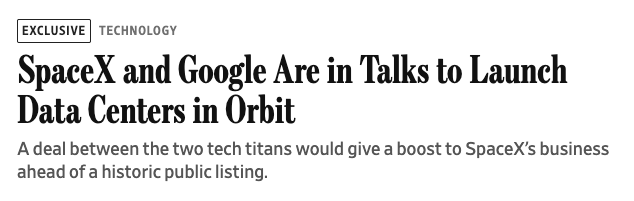
The pioneers of the industry are already aligned. NVIDIA, Google, and SpaceX have all announced plans to build AI data centres in space.
So, today we’re going to go deeper into the why, the challenges, and the opportunities with AI data centres in space.
1/ Land and Power Bottlenecks
We’re in a paradigm shift – things are changing faster than they can be adjusted to.
The following is the AI supply chain.
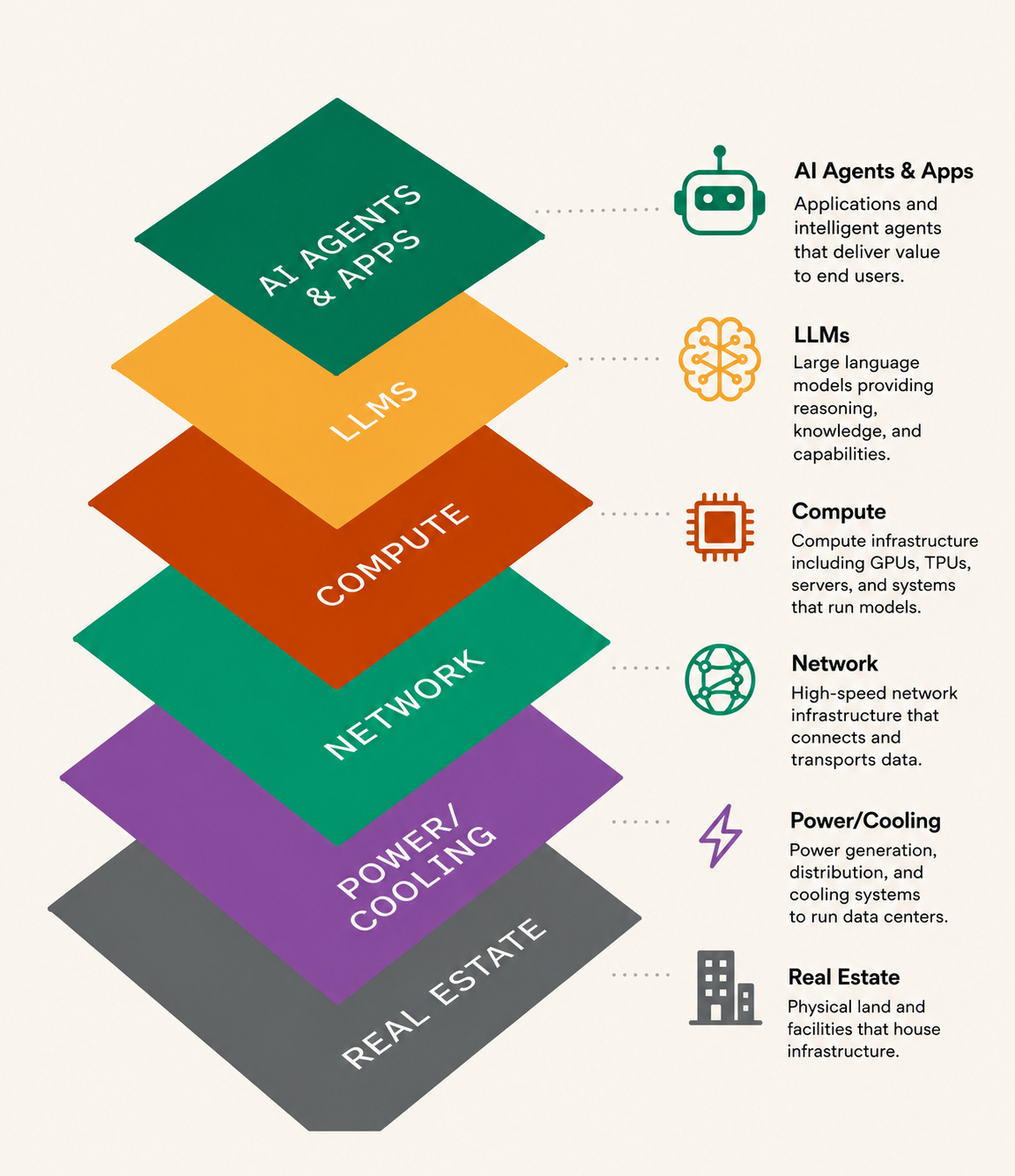
Every stack on this image is a bottleneck right now.
While the top layer will fix itself in due time (thanks to Jevon’s paradox), it’s the bottom ones that are causing (and will continue to cause) the AI investments to spiral out of hand — not because they’re too pricey but because they delay things on end.
Here’s the breakdown of the cost of running a data centre.
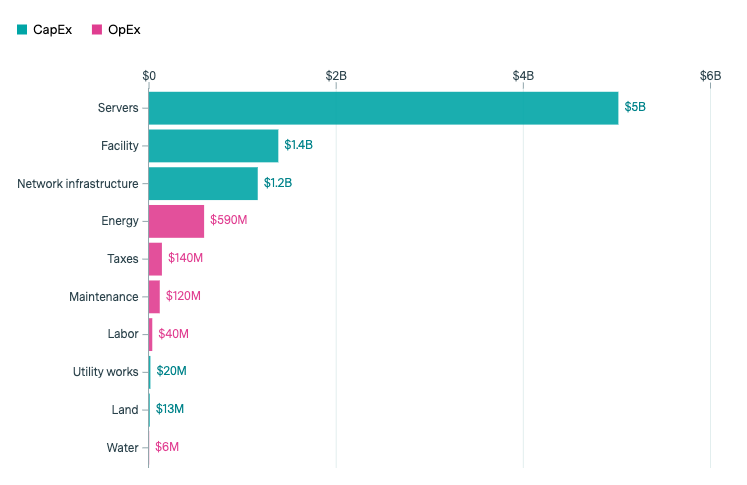
60% of the datacenter costs are borne by servers – that’s GPUs and CPUs.
Land (with water) and energy account for a smaller fraction of the overall capex, but these two are responsible for almost all of the data centre build-up delays in the US — and why we can’t have the good things like unlimited Claude Fable.
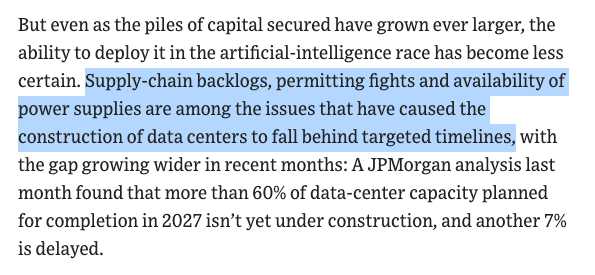
Neither of them follows Moore's Law.
Surprisingly, space is the answer for both of them.
2/ Why the space is perfect
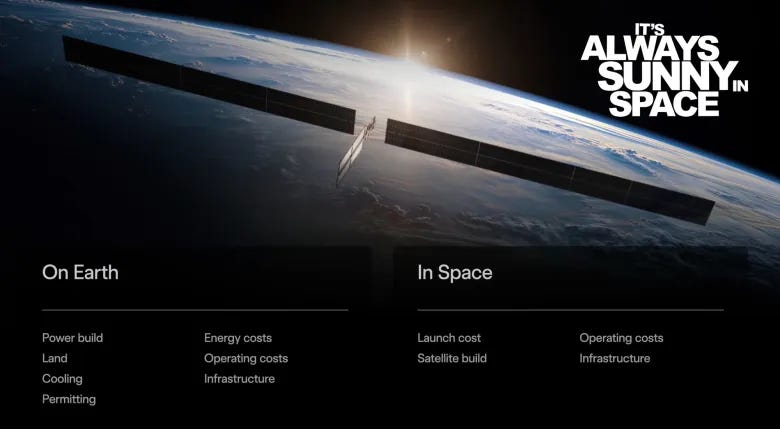
Space doesn’t just solve the bottlenecks – it inverts them.
Space solves the real estate and power bottlenecks.
You don’t need permits to scale in space.
There’s unlimited power to power the GPUs — the sun’s always shining.
Space is a cold vacuum, so you don’t need water to cool the data centres.
The implication is straightforward: unlimited real estate, unlimited power, unlimited cooling.
Which means unlimited compute.
Which means forever-available intelligence — the way the internet is today.
3/ Why everyone wants to be in space!
Necessity is the mother of invention, they say.
When an industry hits a constraint it can’t solve, every player makes the same move: they look upstream and downstream to own more of the chain.
Take Nvidia.
NVIDIA has a great moat in building GPUs, but it is now being competed with, and new players are coming in from all directions.
Groq (which Nvidia acquired), AMD, OpenAI, Cerebras, Amazon, Google, China, and a bunch of other companies are coming to their beloved GPU market.
Now, NVIDIA isn’t going anywhere, but they see a future with competition-led reduced margins. So, the only legible bet is to own the complete AI supply chain end-to-end.
You come for training but stay for inference too.
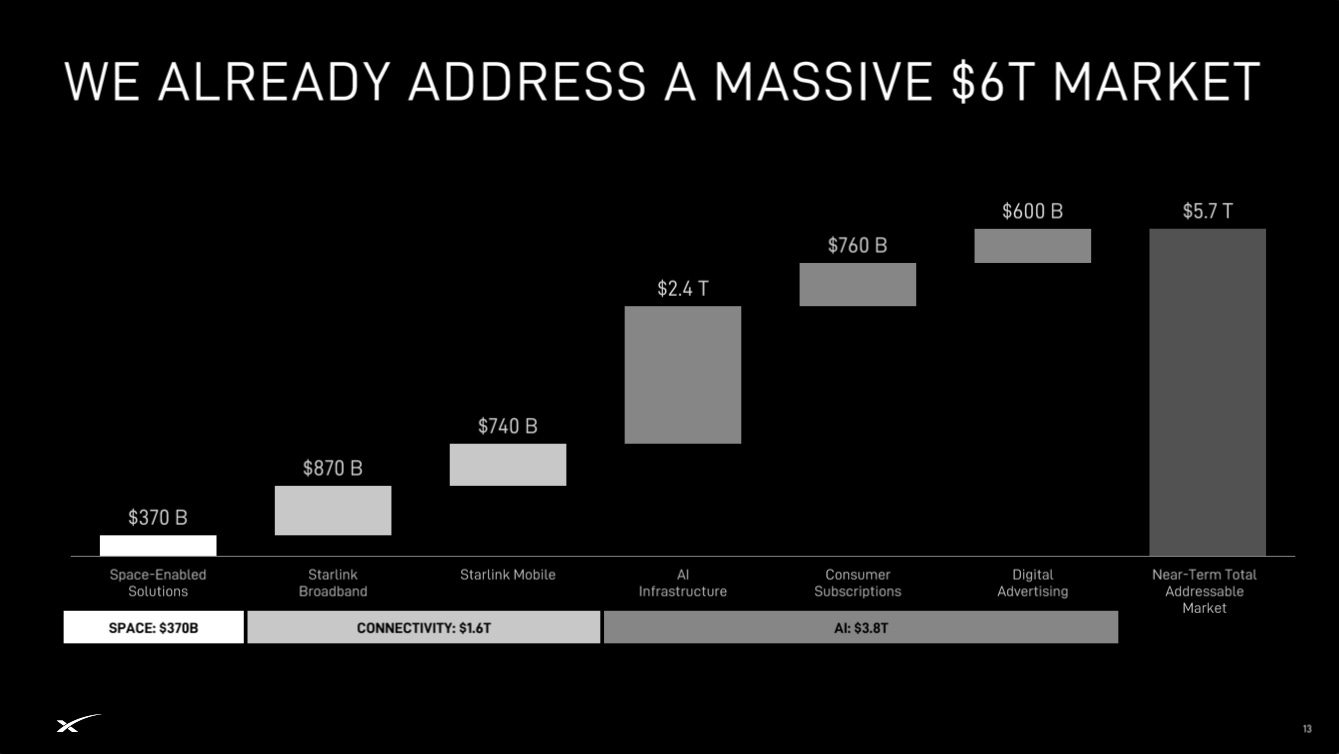
Similarly, SpaceX needs to justify its 2T post-IPO valuation.
They’re banking heavily on their ability to put datacentres in space – much like the Starlink network – and in their case, the bet doesn’t seem far-fetched at all.
And Google wants to be everywhere.
They already control the mobile AI ecosystem, the search in each AI query, the data, the ecosystem, the compute, the GPUs and now datacentres too.
They anticipate all this traffic hitting their systems, and what better way to partner with SpaceX and set up their own TPU fleet in space.
All in all, the reason why almost all of these companies are trying to get into space for compute is that almost all of them agree unanimously on the opportunity cost of owning the
So, you’ll have anywhere near more than a million satellites in space for compute — what does that mean for you?
4/ The Forever Intelligence
Now, the optimistic case is straightforward: space compute solves the bottleneck, intelligence becomes as abundant as the internet, marginal costs collapse, and we get the stuff everyone’s waiting for — instantaneous reasoning, always-on agents, and personalised AI that actually works.
This unlocks 3 domains of applied AI:
Cloud AI
Physical AI systems
Wearable AI systems
What you and I use today, ChatGPT and Claude, are Cloud AIs, but they are laggy, and they are expensive.
As it happened in the internet era, the reduction in latency and costs with Cloud AI paves the way for advancements in physical AI systems.
Boston Dynamics, Tesla Optimus, Figure AI—every physical AI company today is constrained by the same problem: on-device compute is weak, so they trade off latency for accuracy with a nano-LLM or a small vision model.
The limited processing power adds latency, and the entire system is then a negotiation between compute power and battery capacity.
With more performant, cheap cloud AI, these constraints vanish. Even if the humanoid might not become faster, it will for sure become cheaper.
Wearable AI systems come last. Right now, AR glasses need a phone tether or accept 500ms latency.
But with a direct connection to an orbital AI cluster, real-time visual reasoning, live translation and instant context about everything you're looking at become a reality.
This is when wearables stop being phones and become extensions of thought.
So, an AI-enabled toy, an always-on intelligent sentry system, your Meta glasses, or a more robust intelligent floor manager — all of this and more is possible when intelligence is commodified.
In Closing
Space compute is coming because the current bottlenecks leave no other choice.
With unlimited scale comes commoditisation of costs.
And each layer enables the next.
Cloud AI cuts costs.
Physical AI becomes feasible.
Wearables become essential.
But none of it works without breaking the power constraint first.
That's what space compute does. It's not just the application layer — it's the foundation everything else stands on.
You seem to ignore some of the technical challenges of putting data centres into space right now, which makes your article a bit misleading. But relax, you are not the only one because you all think Musk will solve these challenges in the next few years. A year ago this idea was thrown out as some kind of science fiction ambition that seems to have obtained its own momentum.
For example, solar power needs to be collected on panels, very large and heavy ones . Like gigantic ones that are heavy to get into space and that would be insanely expensive. On the cooling side, yes space is a cold vacuum. But think about it, low earth orbits give you higher latency but you are not going to get 24 hours of sunlight. Also, the temperatures can vary enormously; from -160 degrees centigrade to + 120, ie not great for your electronics. So lets say you shoot for higher orbits and 24/7 sunlight, well then you have to deal with higher radiation levels and much lower latency. And how do you service these things in space? Processors can and do disfunction and are more likely to do so in space using current tech. And how do you cool stuff in a vacuum? Well you need radiative cooling which means more huge and heavy panels. There are no molecules in space to "air cool" your heat sinks.
There is also the little matter of the risk of some of these "Dyson Swarm" satellites experiencing Kessler Syndrome. Even at current density levels Spacex is having to do an insane number of flight path variations in order to avoid collisions. But apparently AI is going to take this over so everything is going to be ok. The list goes on.
Bottom line is that we are probably 10-15 years away from doing this commercially in space, at best. By this time who knows, we might have quantum computing, ASI , fusion, more underwater data centres OR whatever.
It makes sense. ✅